Accident-damaged cars and write-off categories: A, B, S and N explained
An accident-damaged car isn’t automatically a bad buy, as long as you know about the damage and the price reflects it. The trouble starts when the damage is hidden. Here is what the insurance write-off categories A, B, S and N (and the older C and D) mean, how to find out whether a car has been damaged, and how to spot a repair.
carVertical discount code
AUTOSPEKTUK
20% off
Code checked: 20 November 2026
Is an accident-damaged car always a bad choice?
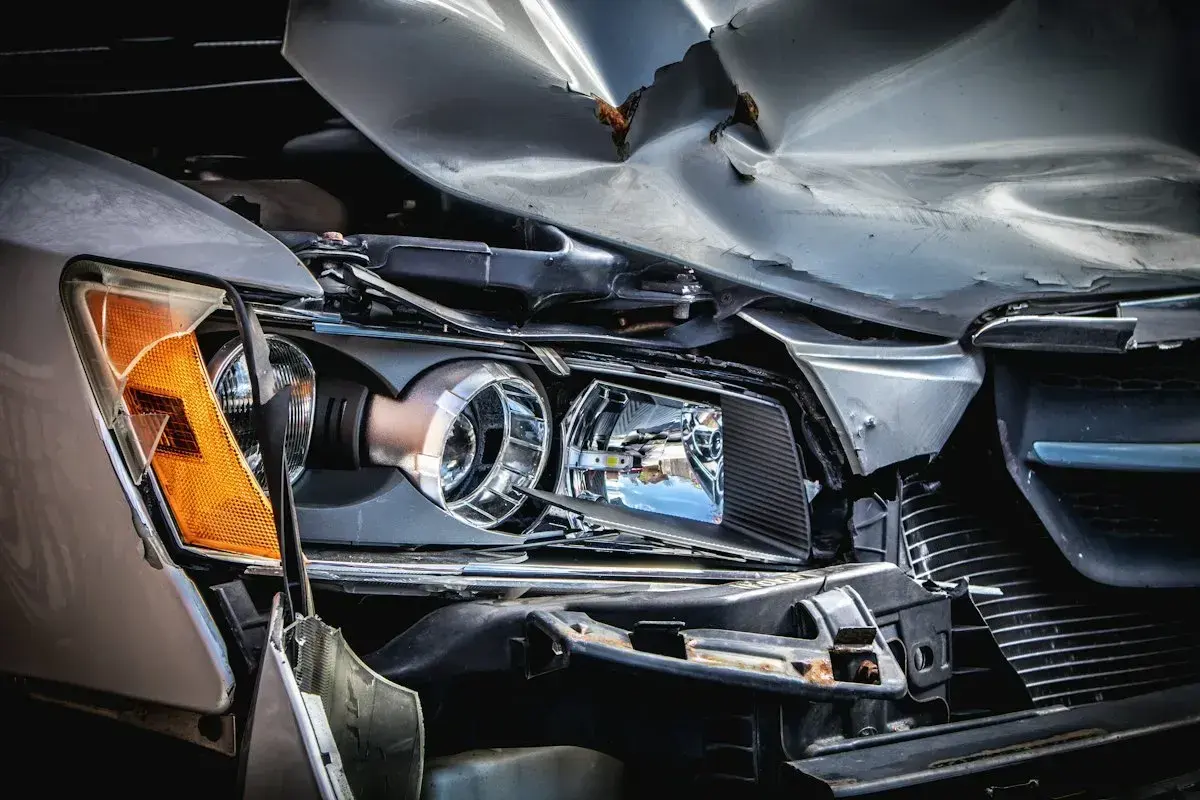
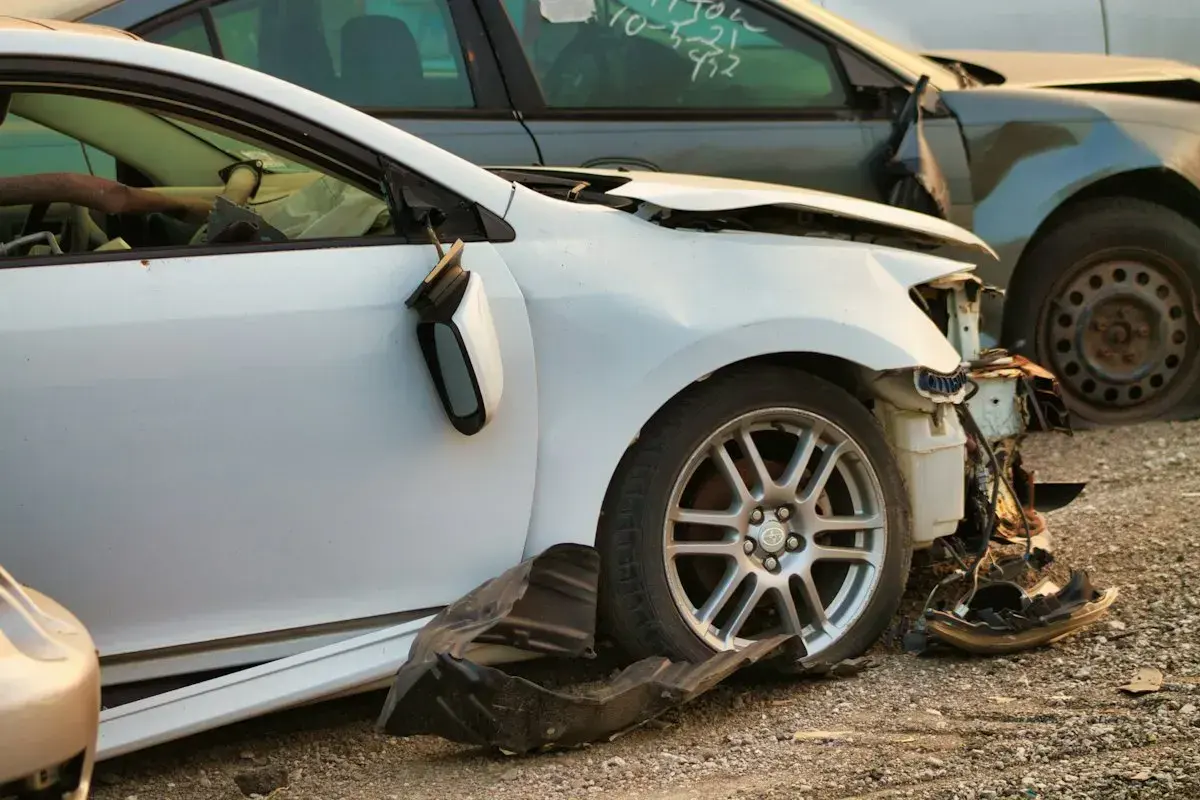
No. “Accident-damaged” covers a huge range: from a scuffed front panel after a car park knock to a car rebuilt after a serious crash. A small, well-repaired job at a good body shop doesn’t condemn a car. A heavy impact repaired on the cheap, with structural parts affected and airbags not replaced, puts your safety at risk.
What matters is knowing about the damage before you buy and paying the right price. A repaired car with full paperwork can be a better buy than a car sold as “never had an accident” that hides one.
How to tell if a car has been in an accident: where to look
The free DVLA vehicle enquiry service and the MOT history don’t show whether a car has been written off by an insurer. Citizens Advice recommends a private history check, which can show whether a car has been in a serious accident or written off, repaired and returned to the road. A car history check shows damage where it has been recorded, sometimes with a date and description. Damage repaired without an insurance claim often leaves no record, so always follow up with an inspection.
Insurance write-off categories explained
When an insurer writes a car off after a claim, it gives it a category. Since October 2017 insurers have used A, B, S and N; cars written off before then may carry the older C or D.
-
A
- What it means
- Cannot be repaired. The entire vehicle has to be crushed.
- Can it go back on the road?
- No
-
B
- What it means
- Cannot be repaired. The body shell has to be crushed, but other parts can be salvaged.
- Can it go back on the road?
- No
-
S
- What it means
- Can be repaired following structural damage.
- Can it go back on the road?
- Yes, if repaired to a roadworthy condition
-
N
- What it means
- Can be repaired following non-structural damage.
- Can it go back on the road?
- Yes, if repaired to a roadworthy condition
-
C (before October 2017)
- What it means
- Could be repaired, but repairs would cost more than the car was worth.
- Can it go back on the road?
- Yes, if repaired
-
D (before October 2017)
- What it means
- Could be repaired for less than the car was worth, but other costs (such as transport) took the total over its value.
- Can it go back on the road?
- Yes, if repaired
| Category | What it means | Can it go back on the road? |
|---|---|---|
| A | Cannot be repaired. The entire vehicle has to be crushed. | No |
| B | Cannot be repaired. The body shell has to be crushed, but other parts can be salvaged. | No |
| S | Can be repaired following structural damage. | Yes, if repaired to a roadworthy condition |
| N | Can be repaired following non-structural damage. | Yes, if repaired to a roadworthy condition |
| C (before October 2017) | Could be repaired, but repairs would cost more than the car was worth. | Yes, if repaired |
| D (before October 2017) | Could be repaired for less than the car was worth, but other costs (such as transport) took the total over its value. | Yes, if repaired |
Sources: GOV.UK: insurance write-offs (A, B, S, N), the archived 2016 version of the same GOV.UK page (C, D) and the GOV.UK guide to buying repaired written-off vehicles. Legal position as at 20 November 2026.
Cat S and Cat N cars: what the categories tell you
Categories S and N are given to cars that could be repaired, but where the insurer judged that repair would cost more than the car was worth and paid out instead. The difference is the type of damage: S means the car’s structure was damaged, N means the damage was not structural. Both can return to the road once repaired to a roadworthy condition.
When an owner keeps a Category S car, they must send the complete log book to their insurer and apply for a duplicate, and DVLA records the category in the log book. An owner keeping a Category N car can keep their log book (GOV.UK: insurance write-offs). Even so, don’t rely on the paperwork alone: check the car’s history and ask the seller directly whether it has ever been written off.
The old categories C and D worked differently: they were based on the cost of repair compared with the car’s value, not on the type of damage. A former Cat D car may have had only light damage on an older car, or more serious damage on a newer one. The category alone tells you little: what counts is the repair invoices and an inspection.
Buying a repaired write-off: what to check
The steps the GOV.UK consumer guide recommends, in a practical order.
Get a history check
Confirm the category, the date of the write-off and whether there are other records, such as finance or theft.
Car history checkAsk who repaired it
Ask who had the car between the write-off and the repair, and for the repair invoices and photos of the damage.
Get an independent inspection
Have an engineer check the car for structural damage and that the repair was done properly.
Check the V5C and records
Compare the V5C with the DVLA record, and look at the full service history and MOT history.
Free car checkCall your insurer
Get a quote before you commit, and tell the insurer about the write-off when you buy.
Signs of accident repair to look for
Look at the car in daylight, with the bodywork clean and dry. Repair work shows best up close and with light falling across the panels.
Outside
- Uneven gaps between doors, bonnet and wings
- Slight colour differences between neighbouring panels, runs or dust in the lacquer
- Overspray on rubber seals, trim and window edges
- Glass with different manufacturing dates
- New headlights on an older car, or different lights left and right
Under the bonnet and in the boot
- New bolts on the wings and bonnet of an older car
- Paint marks on bolts and hinges
- Welding marks in the engine bay
- Welds, filler or fresh sealant in the boot floor under the carpet
- Chassis legs that look bent, creased or straightened
Measuring paint thickness
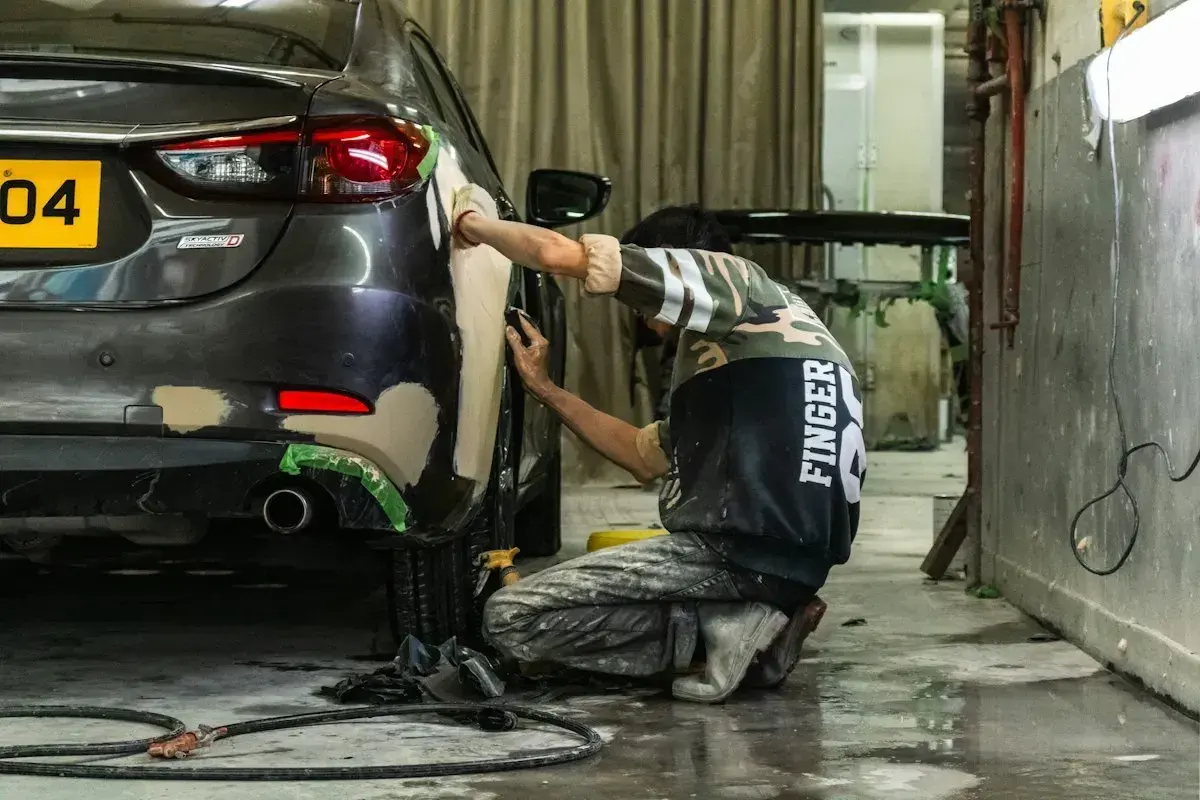
A paint depth gauge shows which panels have been repainted and where there is filler. Measure each panel in several places: roof, bonnet, wings, doors, sills and pillars. A noticeably higher reading on one panel usually means a respray, and a very high reading often means filler underneath.
The differences between panels matter more than the numbers. One repainted door often means a scratch. The whole front repainted, with a thick layer right up to the chassis legs, points to a serious impact. Aluminium and plastic panels need a suitable gauge or probe.
Types of damage and the risk for a buyer
Not all damage is equal. What counts is where it was, how big it was and how well it was repaired.
-
Cosmetic
- What it usually means
- Scratches, dents, one panel repainted
- Risk for a buyer
- Low, if the repair is neat
-
Body panels
- What it usually means
- Door, wing or bonnet repaired or replaced
- Risk for a buyer
- Medium: check gaps and paint
-
Structural
- What it usually means
- Chassis legs, sills or pillars repaired
- Risk for a buyer
- High: affects crash safety
-
Cat S
- What it usually means
- Written off after structural damage, then repaired
- Risk for a buyer
- High: inspection and repair invoices essential
-
Cat N
- What it usually means
- Written off after non-structural damage, then repaired
- Risk for a buyer
- Medium: check the repair and the insurance cost
-
Flood
- What it usually means
- Water in the cabin, electrics, corrosion
- Risk for a buyer
- High: faults appear over time
| Type of damage | What it usually means | Risk for a buyer |
|---|---|---|
| Cosmetic | Scratches, dents, one panel repainted | Low, if the repair is neat |
| Body panels | Door, wing or bonnet repaired or replaced | Medium: check gaps and paint |
| Structural | Chassis legs, sills or pillars repaired | High: affects crash safety |
| Cat S | Written off after structural damage, then repaired | High: inspection and repair invoices essential |
| Cat N | Written off after non-structural damage, then repaired | Medium: check the repair and the insurance cost |
| Flood | Water in the cabin, electrics, corrosion | High: faults appear over time |

Airbags after an accident
After a serious impact, the airbags may have gone off. Replacing the whole system is expensive, and a cheap repair may skip it or do it halfway. Check that the airbag warning light comes on when you start the car and then goes out. Look at the steering wheel, dashboard and pillars: a different plastic texture, uneven gaps or glue marks suggest replacement. If in doubt, ask a garage to read the airbag system’s fault codes.
How to spot a flood-damaged car
A flood-damaged car is often freshly valeted and scented. These traces are harder to remove.
Inside
- A musty smell, especially after the car has been closed up in the sun
- Silt, sand or mud under the carpets and in the seat runners
- Damp and rust in the boot and the spare wheel well
- Condensation inside the headlights or instrument cluster
Technical
- Corrosion in unusual places: seat bolts, wiring, connectors
- Electrical faults that come and go
- Water marks in the air filter housing
- New carpets and trim in an older car with no explanation
Negotiating the price of an accident-damaged car
If a history check or a paint gauge reveals damage the seller didn’t mention, you have a strong argument. Ask for the repair invoice, any engineer’s report and photos of the damage before repair. A repair at a franchised dealer with genuine parts is a different thing from a quick tidy-up before sale.
For well-repaired panel damage, the price difference may be small. For structural repairs, replaced airbags or a write-off category, the price should be well below a comparable undamaged car, because future buyers and insurers will make the same calculation. Write any known damage or write-off category on the receipt.
The seller denies the damage
Even though it shows in a history check or on the paint gauge.
Structural repairs without paperwork
Sills, pillars or chassis legs cut, welded or straightened, with no invoices.
Airbag warning signs
New covers, a different dashboard texture or an airbag light that stays on.
No independent inspection
The seller won’t let an independent mechanic look at the car.
Frequently asked questions
What are the insurance write-off categories?
Since October 2017: A (cannot be repaired, the whole vehicle is crushed), B (cannot be repaired, the body shell is crushed but parts can be salvaged), S (repairable after structural damage) and N (repairable after non-structural damage). Only S and N can go back on the road.
What is a Cat S car?
A car an insurer wrote off after structural damage, which can then be repaired. It can be used again once repaired to a roadworthy condition, but you should see the repair invoices and have the structure inspected.
What is a Cat N car?
A car an insurer wrote off after damage that was not structural. It can go back on the road once repaired to a roadworthy condition.
What were Cat C and Cat D?
The categories used before October 2017. C meant repairs would cost more than the car was worth; D meant repairs cost less, but other costs took the total over the car’s value. Both were based on cost, not on the type of damage.
Can you insure a Cat S or Cat N car?
Usually yes, but premiums for a previously written-off car can be significantly higher. Get a quote before you buy and tell your insurer the car was written off, or it may reject a claim for non-disclosure.
How can I tell if a car has been in an accident?
Run a history check for recorded damage and write-offs, then inspect the car in daylight: panel gaps, paint colour and thickness, overspray, new bolts and welding marks in the engine bay and boot. An independent inspection is the safest option.