VIN check UK: what the VIN is, where to find it and how to read it
A VIN check confirms that the car in front of you is the car on the paperwork. The vehicle identification number is the 17-character code that stays with a car for life, whatever number plate it carries. Here is where to find it, how to match it against the V5C and what the characters mean.
carVertical discount code
AUTOSPEKTUK
20% off
Code checked: 20 November 2026
What is a VIN?
The VIN (vehicle identification number), sometimes called the chassis number, is a unique code given to a vehicle by its manufacturer. It has 17 characters: digits and capital letters, without I, O and Q, so they can’t be confused with 1 and 0. Its structure is set by the international standard ISO 3779.
Every vehicle registered in the UK must have a unique VIN stamped into it, usually into the chassis, according to the GOV.UK guidance on the vehicle identification number. The number plate can change during a car’s life, for example with a private plate or after import. The VIN doesn’t. That is why it is the safest way to make sure records, the V5C and the car itself all refer to the same vehicle.
Where to find the VIN
Check it in all of these places. The number must be identical everywhere.
V5C log book
The registration certificate lists the VIN alongside the engine number. Ask to see the original V5C, not a photo or photocopy.
Base of the windscreen
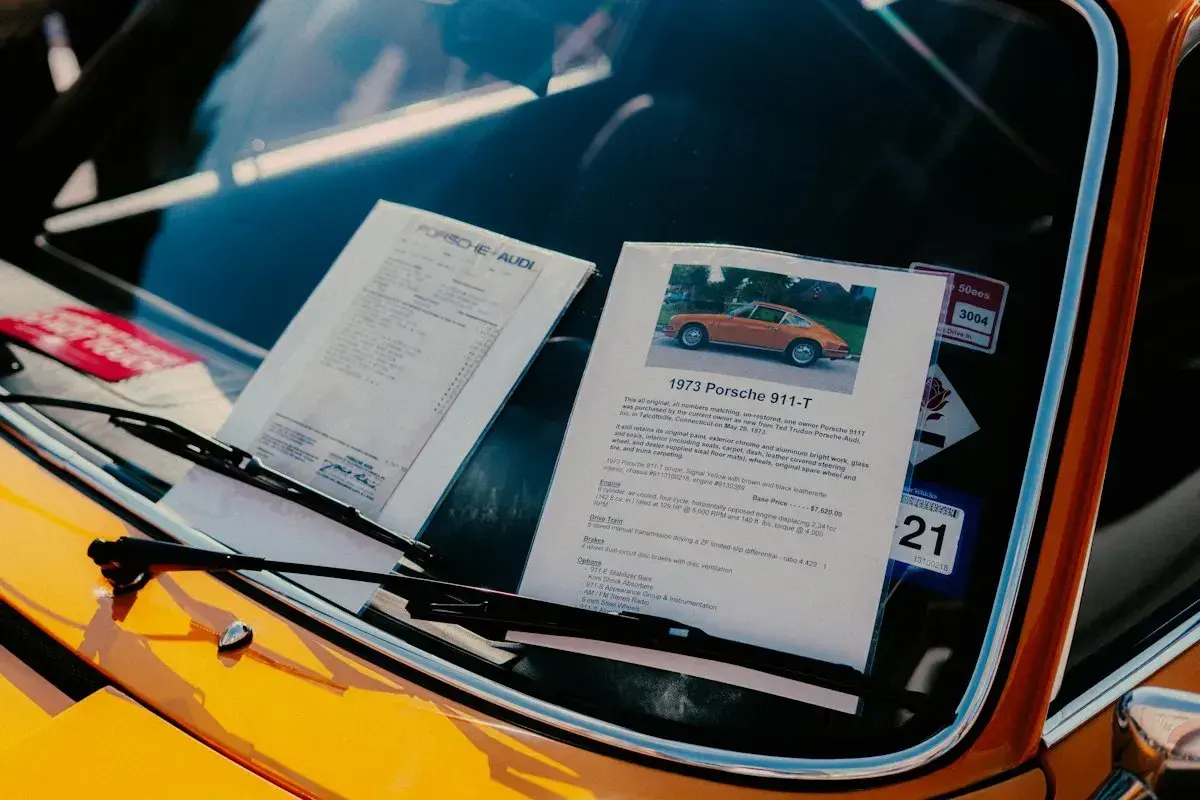
On most modern cars, a plate visible from outside through the windscreen. You can photograph it before you even talk to the seller.
Door pillar label
A manufacturer’s label, usually on the pillar or edge of a door opening.
Stamped into the body
Stamped into the metal, often under the bonnet or under the carpet near a front seat. This is the hardest place to fake.
How to do a VIN check before you buy
Four steps of a few minutes each that protect you from a stolen or disguised car.
Ask for the VIN in advance
Ask the seller for the registration and VIN, or read the VIN from the windscreen plate in the advert photos.
Check the free records
Use the registration number in the DVLA vehicle enquiry and MOT history services. The details should match the advert.
Free car checkCheck the history
A paid history check by VIN can show write-off, finance and theft records, and records from abroad for an imported car.
Car history checkMatch it on the day
Compare the VIN and engine number on the V5C with the windscreen plate, the door label and the stamped number.
How to read a VIN: the three sections
The 17 characters are split into three parts. Each tells you something different about the car.
-
WMI
- Characters
- 1 to 3
- What it tells you
- World manufacturer identifier: region, country and manufacturer.
-
VDS
- Characters
- 4 to 9
- What it tells you
- Vehicle descriptor: model, body type, engine. The 9th character is sometimes a check digit.
-
VIS
- Characters
- 10 to 17
- What it tells you
- Vehicle identifier: usually model year, factory and serial number.
| Section | Characters | What it tells you |
|---|---|---|
| WMI | 1 to 3 | World manufacturer identifier: region, country and manufacturer. |
| VDS | 4 to 9 | Vehicle descriptor: model, body type, engine. The 9th character is sometimes a check digit. |
| VIS | 10 to 17 | Vehicle identifier: usually model year, factory and serial number. |
WMI: the manufacturer
The first three characters are the world manufacturer identifier. The first shows the region or country where the car was built, the next two narrow it down to the manufacturer. Cars built in the UK usually start with S. Other common first characters are W for Germany, Z for Italy, V for France and Spain, J for Japan, K for South Korea, and 1, 4 or 5 for the United States. The country is where the factory is, not where the brand has its head office.
VDS: the vehicle description
Characters 4 to 9 describe the model, body style, engine or version, each manufacturer using its own key. The same character can mean something completely different for two brands. On cars built for North America, the 9th character is a compulsory check digit; on European cars it is sometimes just a filler.
VIS: the individual car
Characters 10 to 17 identify the individual car. The 10th usually gives the model year (L for 2020, R for 2024, T for 2026), the 11th the factory and the last six the serial number. European manufacturers don’t have to code the year in position 10, so treat it as a hint and confirm the date of first registration with DVLA.
To find the trim, paint code or original equipment, you need the manufacturer’s own decoder, because each brand uses its own key. A decoder tells you how the car was built, not what has happened to it since. For that, you need the free GOV.UK records and, where needed, a car history check.
Where the car was built: the first character of the VIN
Common first characters on cars sold in the UK.
-
S
- Region or country of the factory
- United Kingdom, Poland and others
- Notes
- The country depends on the second character
-
W
- Region or country of the factory
- Germany
- Notes
- A frequent origin of imported cars
-
V
- Region or country of the factory
- France, Spain, Austria
- Notes
- The country depends on the second character
-
Z
- Region or country of the factory
- Italy
- Notes
-
T
- Region or country of the factory
- Switzerland, Czechia, Hungary
- Notes
- The country depends on the second character
-
Y
- Region or country of the factory
- Sweden, Finland, Belgium
- Notes
- The country depends on the second character
-
J / K / L
- Region or country of the factory
- Japan / South Korea / China
- Notes
-
1, 4, 5
- Region or country of the factory
- United States
- Notes
- Check the damage history of US imports with particular care
| First character | Region or country of the factory | Notes |
|---|---|---|
| S | United Kingdom, Poland and others | The country depends on the second character |
| W | Germany | A frequent origin of imported cars |
| V | France, Spain, Austria | The country depends on the second character |
| Z | Italy | |
| T | Switzerland, Czechia, Hungary | The country depends on the second character |
| Y | Sweden, Finland, Belgium | The country depends on the second character |
| J / K / L | Japan / South Korea / China | |
| 1, 4, 5 | United States | Check the damage history of US imports with particular care |
The VIN shows where the factory is, not the brand’s home country: the same model can start with different characters.
VIN checks in practice
Situations where the VIN needs extra attention.
Older cars
Cars from before the 1980s can have shorter chassis numbers that predate ISO 3779. That isn’t an error, but check them carefully.
Imported cars
A car registered abroad gets a new UK registration. The VIN is what links its UK records with its earlier life.
Repaired or rebuilt cars
GOV.UK notes that the VIN may be lost if a vehicle is repaired, restored or modified. When a vehicle’s identity is in doubt, DVLA may assess it, and without proof of the original VIN it needs a replacement identity number.
Sticker instead of a plate
A missing manufacturer’s plate, or a sticker where a riveted plate should be, deserves questions.
Frequently asked questions
What is a VIN number on a car?
It is the 17-character vehicle identification number given by the manufacturer under ISO 3779. It stays with the car for life, even when the number plate changes, and identifies that one vehicle.
Where can I find the VIN on my car?
On the V5C log book, on a plate at the base of the windscreen, on a label in a door opening and stamped into the body, often under the bonnet or under the carpet near a front seat. All of them should match.
How many characters is a VIN?
Seventeen: digits and capital letters, without I, O or Q. Cars built before the 1980s can have shorter chassis numbers.
Can I do a free VIN check in the UK?
The free GOV.UK services search by registration number, not VIN. A free VIN decoder shows how the car was built, not its history. Write-off, finance and theft records need a paid history check, which can be run with the VIN.
What does the 10th character of a VIN mean?
Usually the model year, for example L for 2020, R for 2024 and T for 2026. European manufacturers do not have to use it that way, so confirm the date of first registration with DVLA.